Frogichocking

Please Note: I am not saying the Russians don’t carry out assassinations and other bad things. Almost certainly they do. However, the western reader must know two things. Western intelligence agencies also do bad things, including assassinations, possibly more of them, and that at least some of the bad things the Russians are said to do, and which the western media make a huge song and dance about, are Western-intelligence manufactured hoaxes to put the Russians in a worse light than they deserve.
Now, onto the topic at hand.
Those of you who follow this Substack know that one of our many interests is the Skripal Affair—look elsewhere on the Substack for articles and links to talks about it. Last week I posted on our YouTube channel for the Capitals Uncovered podcast a long interview with Tim Norman, who is perhaps the UK’s premier expert on the Skripal Affair. An investigative journalist based in Brighton, he works as a production editor for Brighton’s main newspaper—an enormously responsible job. He is one of the very few who has attended all the hearings and read all the reports, and I was very pleased to spend a couple of hours with him. For those who don’t have time to watch an entire hour-long programme, our conversation is summarised in the 50 bullet points below.
In this Substack post I’d also like to flag up a future programme coming out later this week on the Capitals Uncovered podcast—an interview with the Australian journalist John Helmer, who has written several books on the Skripal Novichok hoax.
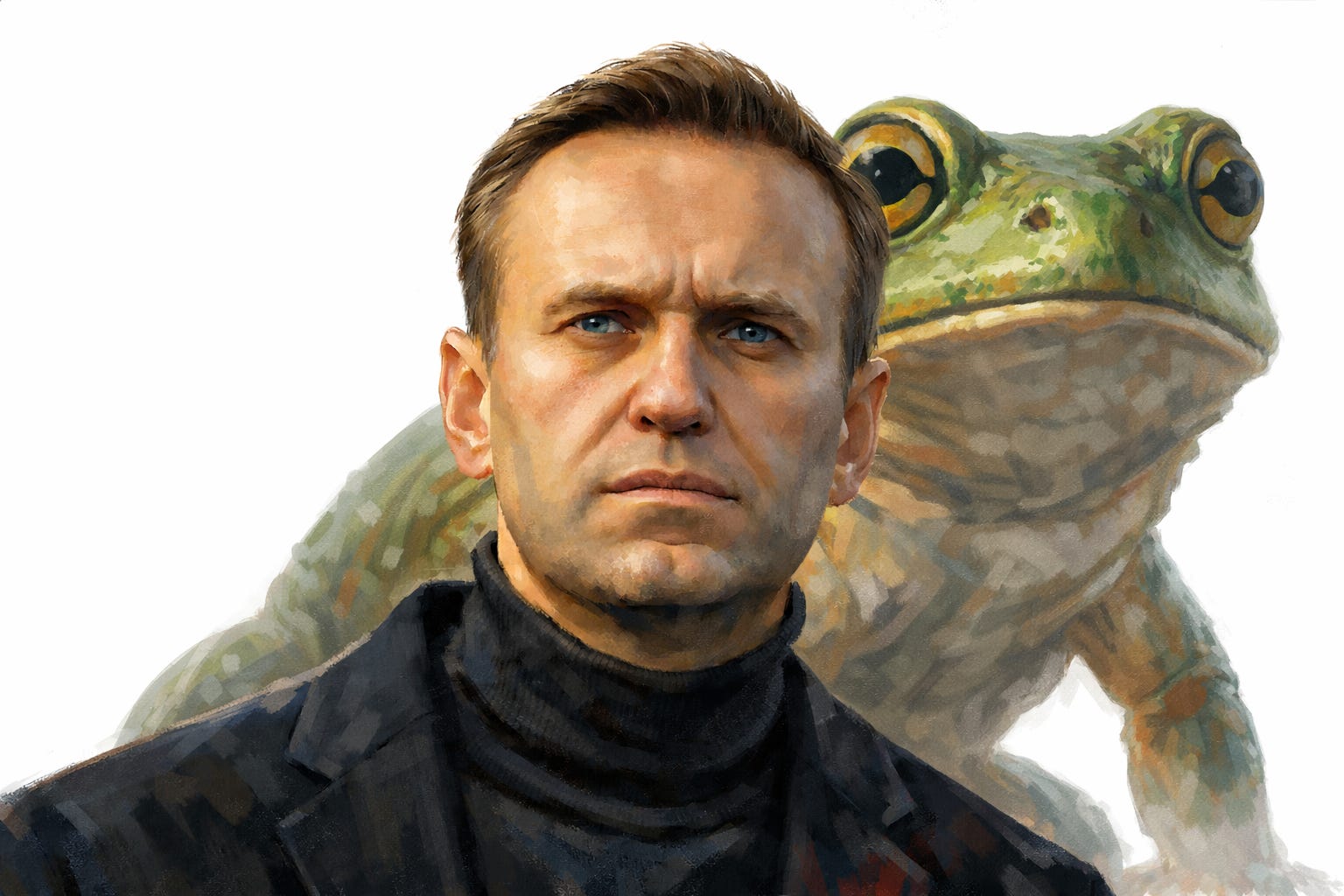
A recent blog post of his argues that the “frogichok”—that is, the Ecuadorian frog-based poison which allegedly killed jailed Russian dissident politician Alexei Navalny—a fresh claim which emerged last week, has to be examined very sceptically.
Navalny was a political figure heavily promoted by Western intelligence services but considerably less popular inside Russia itself, and the last fortnight’s specific poisoning claims about the manner of his death two years ago, in a Russian prison, dominated the British news for several days.
This was followed by further claims and calls from Boris Johnson—a by now thoroughly discredited figure—for British troops to be deployed in Ukraine immediately, a front-page BBC interview with Zelensky in which he declared that World War III has already started and that Putin must be stopped, and so on.
All the old hits trotted out once again, conveniently timed on the eve of the fourth anniversary of the war, and at a time when the Americans are desperately trying to nail down a peace deal between Moscow and Kiev.
On the frogichok itself: we will get more details in the upcoming John Helmer interview. The Ecuadorian poison dart frog produces epibatidine by processing toxins from the insects it eats in the wild. Captive frogs cannot produce it without access to the same toxic insects. Scientists have developed over 50 ways to synthesise epibatidine in the laboratory, making natural frog secretions entirely unnecessary for state actors. So while the vivid headlines pointed to frog poison being used to kill Navalny, it need not have been derived from actual frogs—and even if epibatidine were found in Navalny’s body, that would not point exclusively to Russia. The US and UK synthesised epibatidine first, back in the 1990s, followed by China. Russia reportedly did not openly synthesise it until 2013.
None of this prevented a press conference and a joint press release from the UK, Sweden, France, Germany and the Netherlands claiming that epibatidine had been found in Navalny’s tissue samples, and asserting that only the Russian state had the means, motive and opportunity. Helmer draws the obvious parallel with the Novichok allegations, noting that Porton Down, Britain’s own chemical warfare laboratory, had previously produced the very agent that the British political and media class at the time blamed on Russia. The tissue sample evidence from Navalny’s body was prepared over a six-month period in undisclosed laboratories and collected two years after his death — it is forensically compromised and potentially tampered with. The evidence, as it stands, claims Helmer in a blogpost, is meaningless.
I will certainly be asking him to prove his case, so tune in to the Capitals Uncovered channel if you are interested in this follow up poisoning story. Since the Skripal poisoning was a hoax, it is at least possible than the Navalny poisoning was a hoax.
Now on to the main 50 bullet points from my talk with investigative journalist and Skripal hoax expert Tim Norman, which you can watch in full here.
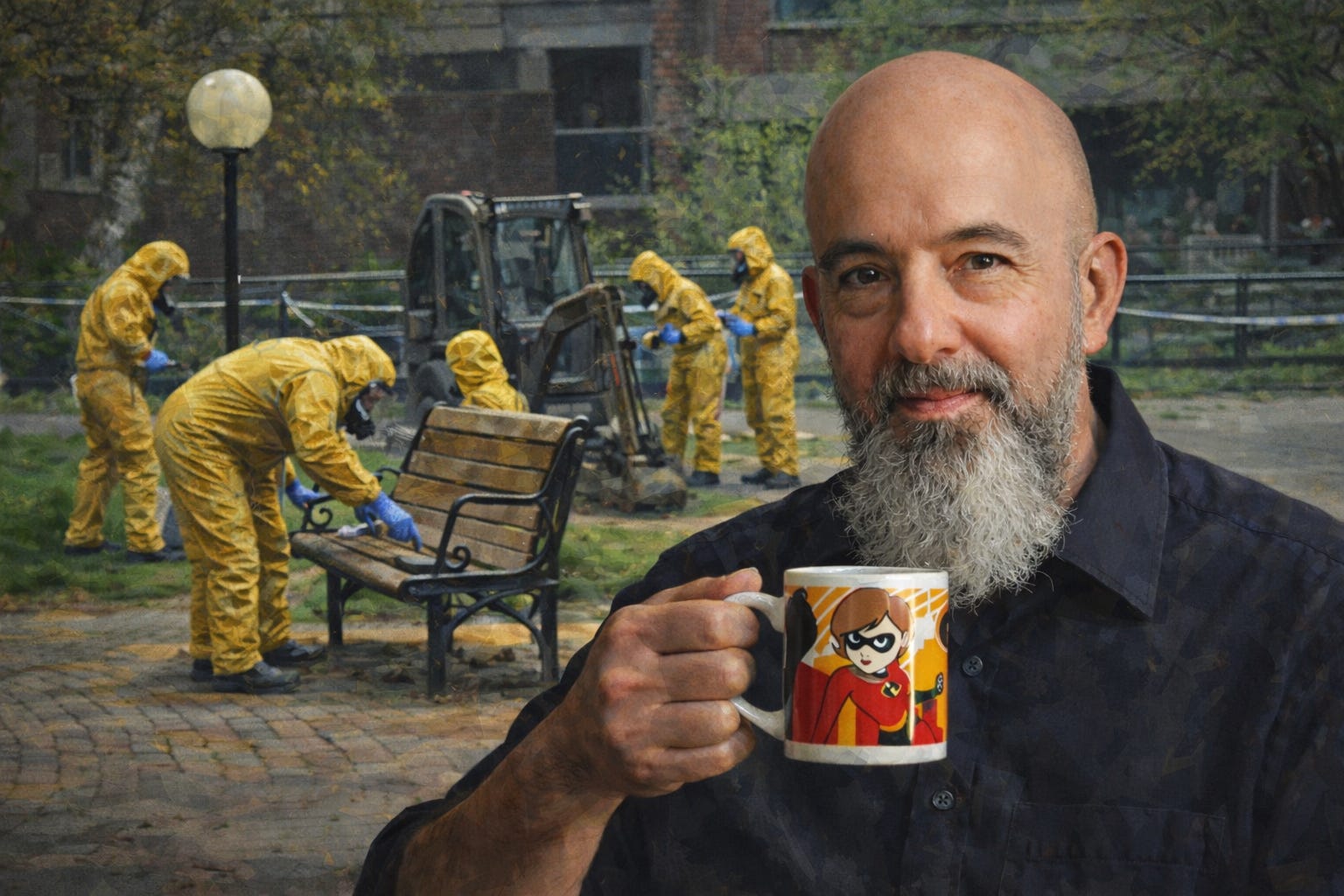
Here are 50 key points from the Tim Norman interview:
The Official Narrative and Its Problems
The official British account claims Putin sent two GRU agents to Salisbury to poison retired double agent Sergei Skripal by smearing Novichok on his front door handle, just three months before the 2018 World Cup.
The two men allegedly walked up to Skripal’s front door at midday on a Sunday, when the entire neighbourhood was at home, and applied the poison without being seen.
Both Sergei and Yulia supposedly touched the poison as they left the house, yet spent three to four hours enjoying drinks at a pub, a meal at an Italian restaurant, and feeding ducks before collapsing simultaneously on a park bench.
The simultaneous collapse is medically implausible given the significant difference in body mass between a large elderly man and a fit young woman — doctors were confused about how two people of such different sizes could be overcome at the same time.
Nobody died in Salisbury on the day of the poisoning — not the Skripals, not any pub or restaurant patrons, and not any wildlife, despite the agent supposedly being more deadly than VX.
The ducks the Skripals fed with their supposedly poisoned hands survived, though Donald Trump was told the ducks died — a claim that emotionally influenced his decision to expel 60 Russian diplomats.
A consultant named Stephen Davis wrote a letter to The Times stating that three people were admitted to Salisbury hospital but none showed signs of nerve agent or organophosphate poisoning, before being silenced.
The Two Russians
Tim Norman believes that the two Russians, subsequently identified as Alexander Mishkin and Anatoliy Chepiga, were in Salisbury but questions whether they were there to kill Skripal, suggesting instead they may have been there to meet him, possibly for an information exchange or even to facilitate his exfiltration back to Russia.
After the alleged poisoning, the two Russians showed no urgency whatsoever — they went window shopping at a stamp and coin shop called Dauwalders, missed an earlier train, and waited 40 minutes at the station.
CCTV from the Dauwalders shop (supplied independently by the shop to both police and press) shows the two men casually browsing, with one tugging the other’s elbow to look at something in the window and trying to enter the shop, which was closed on a Sunday.
The enquiry believes the two Russians actually returned to the Skripal house a second time to observe the Skripals leaving and check that they touched the door handle — a claim the interviewee considers too improbable for words.
At one point, based on CCTV timestamps, the two Russians and the Skripals were within approximately 100 metres of each other, which could support the theory of a planned rendezvous rather than an assassination.
The interviewee argues that genuine secret agents who botched an assassination would never voluntarily appear on their own national broadcaster (RT) six months later without having prepared a proper cover story.
The Novichok Question
Novichok simply means “newcomer” or “newbie” in Russian, and the Russian-sounding name was sufficient in propaganda terms to convince the British public it was a Russian operation.
The Novichok formula has been in the public domain since its publication in a book in 2008, and is not distinctively Russian.
Professor David Collum of Cornell University set his first-year organic chemistry students the task of synthesising Novichok on paper — every student except one got it completely right.
The practical question is not knowledge of the formula but access to safe manufacturing facilities with proper fume cupboards, which many chemical laboratories worldwide possess, not just Russian ones.
VX, which until Novichok was considered the most deadly nerve agent known, was actually developed at Porton Down in the 1950s — by the logic applied to Novichok being “Russian,” all VX attacks should be attributed to Britain.
Porton Down, the British chemical weapons facility closely linked to intelligence services, is located barely eight miles from Salisbury.
The Dawn Sturgess Case
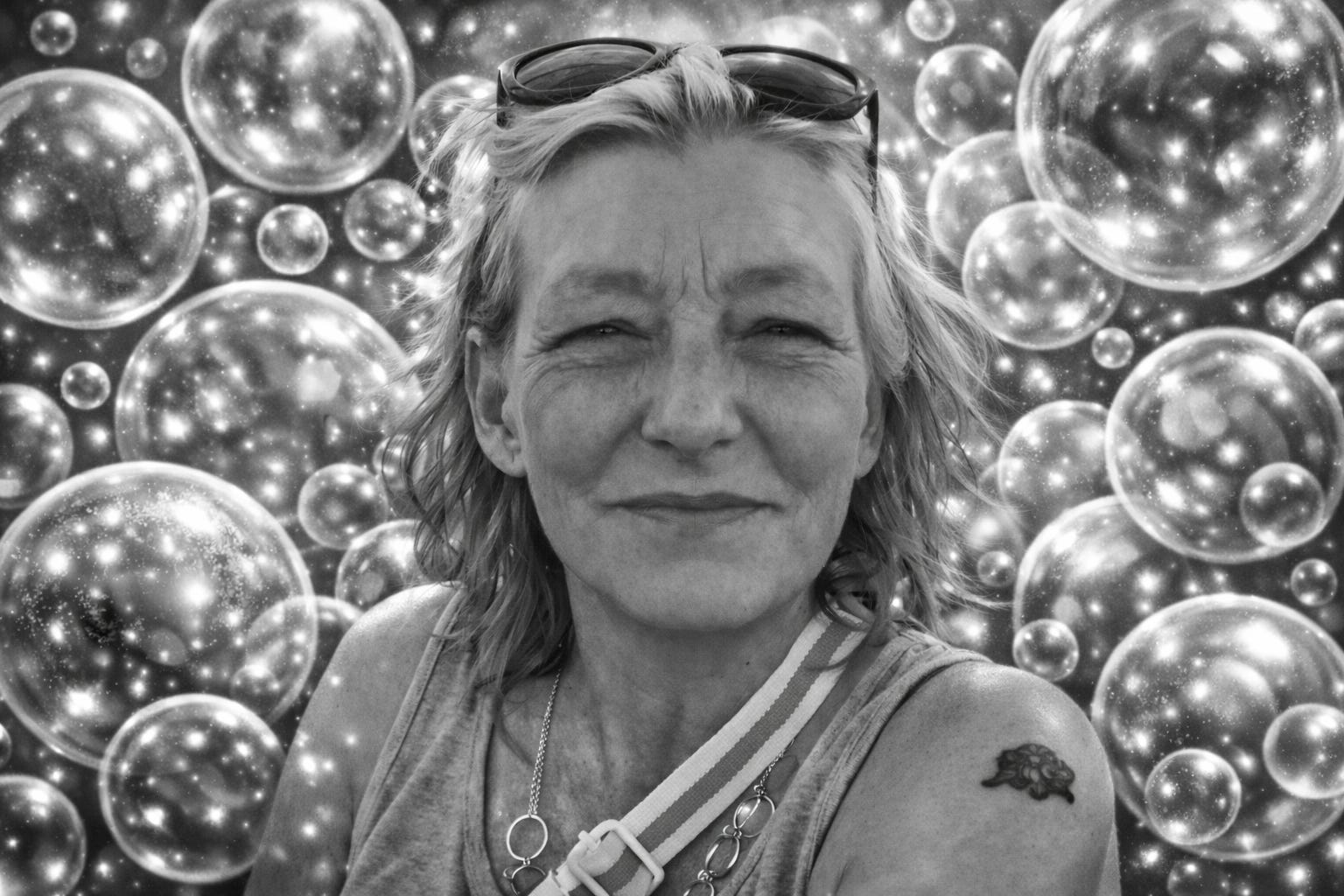
Four months after the Skripal incident, Dawn Sturgess died in Amesbury, about eight miles from Salisbury, and her death was linked to the Skripal event by British authorities.
The entire narrative connecting a discarded Novichok bottle to Dawn’s death rests solely on the testimony of her boyfriend Charlie Rowley — an alcoholic, heroin addict, convicted petty criminal, and convicted fraudster.
Rowley’s previous girlfriend had died of a heroin overdose in his flat two years earlier, making Dawn the second girlfriend to die in his presence at his home.
Rowley was never called to testify at the Dawn Sturgess public enquiry because he was deemed “too drunk” — the key witness to the entire bottle narrative was excluded from the proceedings.
The Skripals were also never called to give evidence at the enquiry, not even by secure video link or in the private closed-door sessions that British public enquiries are permitted to hold.
Rowley had no memory of where he found the bottle and was clearly suggestible during police interviews, with officers appearing to lead him toward the idea that he had found it.
However, Rowley was emphatic in post-hospital interviews that the bottle was wrapped in thick plastic, boxed, and contained in two pieces — creating a major narrative problem for the official account.
To explain the plastic wrapping, the enquiry’s lead counsel Andrew O’Connor advanced the theory that the two Russians went to a public toilet, disassembled their bottle (exposing themselves to lethal risk), heat-sealed it in plastic using a portable sealer, and dumped it in a bin — a scenario the interviewee considers absurd and reverse-engineered to fit Rowley’s testimony.
The bottle was found after 10 days of intensive police searching of Rowley’s flat, sitting in plain sight on the kitchen work surface next to an empty beer glass — strongly suggesting to the interviewee that it was planted while Rowley was in hospital and after Dawn’s life support had been turned off.
The enquiry accepted Rowley’s drug-and-alcohol-impaired account as essentially true while dismissing Yulia Skripal’s blink testimony as unreliable because she was recovering from sedatives — a contradictory standard of evidence.
Dawn Sturgess’s Toxicology
The pathologist Professor Guy Rutty was not given the quantitative drug levels found in Dawn’s system — only told which drugs were present, a significant and anomalous omission.
Dawn’s blood contained cocaine metabolites, sedatives, antidepressants at high levels, and fentanyl — the combination of sedatives, antidepressants, and alcohol alone represented a significant risk of death.
The hospital claimed it administered fentanyl to Dawn after admission, despite her being admitted for a suspected opiate overdose (making further opiates medically inappropriate) and despite her suffering catastrophic brain damage that rendered painkillers unnecessary — this claim made it impossible to determine whether fentanyl was present before admission.
An NHS laboratory in Birmingham specialising in sensitive drug screening found no evidence of organophosphate poisoning in Dawn’s blood — organophosphates being the chemical class that includes all nerve agents from pesticides to sarin, VX, and Novichok.
Porton Down, which took separate samples, claimed to have identified Novichok markers — and internal documents show Porton Down anticipated that the Birmingham lab would not find organophosphate evidence, requesting their own samples in advance.
The enquiry concluded in December that Putin was “morally responsible” for Dawn Sturgess’s death despite all these anomalies.
The Blink Interview
Four days after the Skripals’ admission, ICU consultant Dr. Stephen Cockcroft (24 years’ experience) was called to Yulia’s bedside after a sedation hold ordered by Dr. Haslam, who had then left the hospital.
Yulia was fully awake, trying to get out of bed, pulling at her cannula and lines — displaying high-level neurological function that astonished Cockcroft, who had expected her to be effectively brain dead based on what Porton Down had told the hospital.
Using his standard blink-communication technique with intubated patients, Cockcroft asked Yulia a series of questions: she blinked “no” to having taken something at home, “yes” to remembering being sprayed, and “yes” to being sprayed in the restaurant — before losing consciousness just as he asked if she knew who sprayed her.
Rather than being placed on a swift rehabilitation pathway as her neurological recovery warranted, Yulia was returned to sedation and kept unconscious for approximately 20 days with no further sedation holds attempted.
The hospital’s medical director, Dr. Christine Blanchard, threatened Cockcroft with professional misconduct charges, forbade him from mentioning the episode to colleagues, and removed him from the ICU until the Skripals were discharged. He resigned within six months, ending a 25-year career.
The enquiry dismissed Yulia’s blink testimony on the grounds that she was still affected by sedatives and that insufficient Novichok traces were found in the restaurant — reasoning the interviewee considers circular, as it assumes Novichok was the agent in the first place and retrofits evidence to undermine the witness.
The OPCW and the Tracheostomy
The exact weekend the OPCW team visited Salisbury to take verification samples, both Skripals had tracheostomies performed — surgical holes cut into their throats — creating a physical impossibility for them to speak to anyone, including the international inspectors.
In Yulia’s case, the tracheostomy was removed just four days after the OPCW departed and she left hospital about two weeks later, indicating the procedure was wholly unnecessary.
The OPCW operated a quadruple-blind system with four laboratories (two for environmental samples, two for blood), and the samples given by Porton Down to the OPCW were of unusually high purity — inconsistent with material supposedly recovered from a weathered doorknob but consistent with a fresh laboratory sample.
Russian Foreign Minister Sergei Lavrov revealed that Russia had intelligence from the Swiss OPCW-verified laboratory (Spiez) indicating BZ — a non-lethal incapacitant and powerful hallucinogen — had been identified in the Skripals’ blood. The OPCW did not deny this but claimed BZ was added as a “control substance,” an explanation that conveniently made it impossible to determine whether the Skripals had actually been exposed to BZ.
The Skripal–Steele–Trump Connection
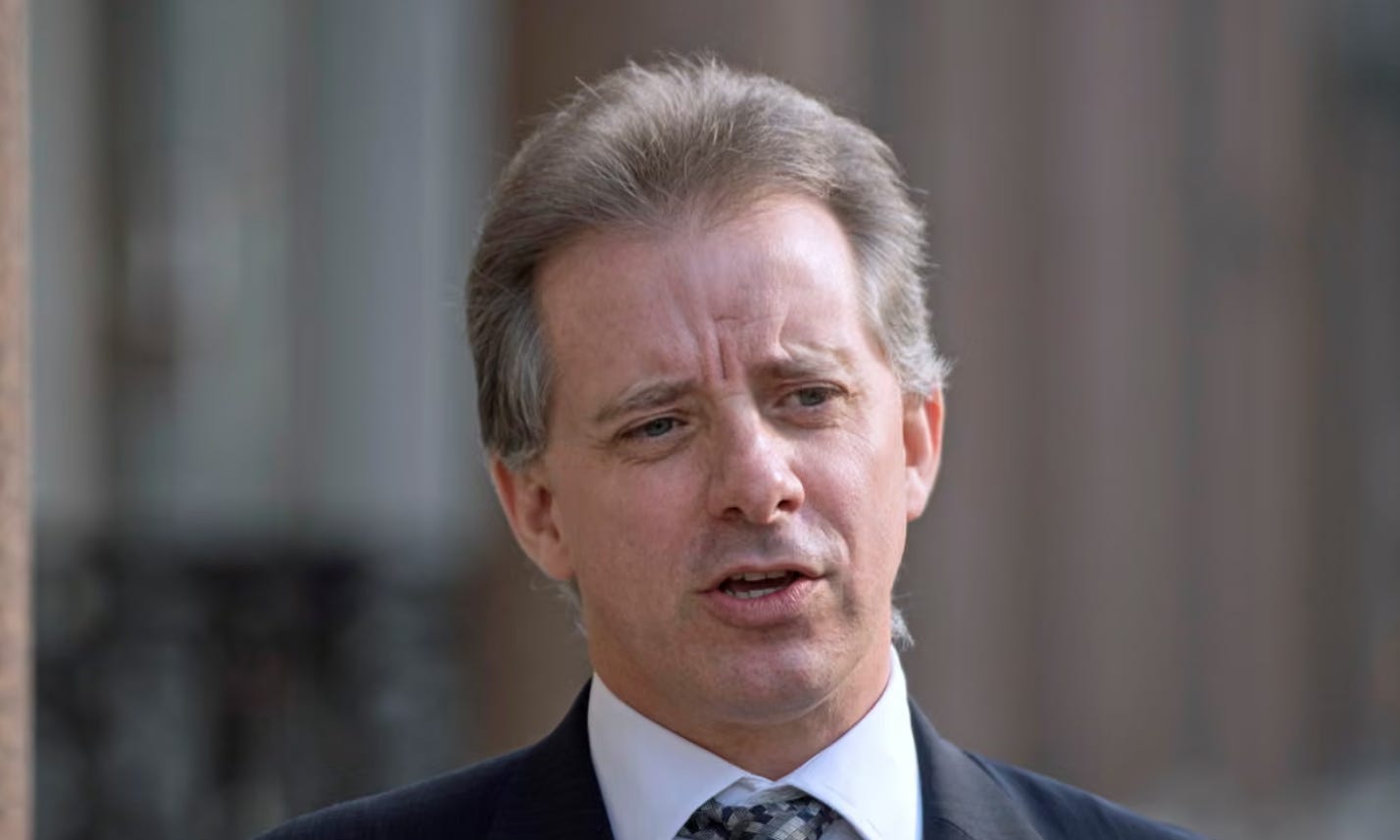
Skripal’s MI6 handler Pablo Miller was associated with ex-MI6 intelligence officer Christopher Steele at Orbis Business Intelligence, who was paid by the Hillary Clinton campaign to produce the Trump dossier consisting of information from alleged Russian sources, which triggered the years-long Russiagate hoax that claimed Trump was a Russian “manchurian candidate”" — making it very likely Skripal was brought in to give the fabricated dossier a patina of authentic Russian intelligence.
This left Skripal sitting on extremely sensitive information about his role in the fake dossier, which he could potentially use to bargain his return to Russia or sell — making him a liability to British intelligence, particularly with Trump’s planned Helsinki summit with Putin in summer 2018.
There is a suggestion in Hillary Clinton’s memos that she wanted mention of Novichok suppressed early on, holding it in reserve as a propaganda instrument to be deployed when the time was right.
The Navalny Parallel
The Bellingcat investigator stated on camera in the Oscar-winning Navalny documentary that Novichok is the “perfect assassination weapon” because all traces vanish from the body within hours — directly contradicting the claim that Novichok was identified in the Skripals’ blood two weeks later and in Navalny’s blood after evacuation to Germany. Putin also allowed Navalny’s medical evacuation to Germany, which makes no sense if he had ordered a Novichok poisoning that German doctors would then detect.
Broader Geopolitical Stakes
The interviewee draws a direct parallel between the Skripal case and the Iraq WMD lies, noting that Novichok is itself classified as a WMD and that the British establishment appears to be repeating the pattern of fabricating weapons claims — but this time against a nuclear-armed superpower, with the stakes being incomparably higher, and warns that a cornered British establishment facing strategic defeat in Ukraine represents a heightened risk of further false flag operations.